When your home’s foundation shows signs of distress, it can be a source of significant worry. These issues can range from minor settling to more serious structural compromise. Underpinning is a specialized process designed to strengthen and stabilize your existing foundation, addressing the root causes of instability and ensuring the long-term health of your property. This article will delve into what underpinning actually involves, the common reasons it’s needed, and the various methods employed to secure your home’s structure.
Key points
- Underpinning strengthens and stabilizes existing foundations.
- Common causes include settlement, soil changes, and increased building load.
- Methods include pier and post support, and sistering foundations.
- It can be integrated into earthquake retrofit and seismic retrofit projects.
- Effective drainage is often a crucial part of the solution.
What is Underpinning and Why is it Necessary?
Underpinning refers to a set of techniques used to strengthen or deepen an existing foundation. It’s typically employed when a foundation is no longer adequate to support the load of the structure above it, or when the soil conditions beneath the foundation have changed, compromising its stability. Common triggers for needing underpinning include significant settlement, erosion of soil, or alterations to the building that increase its weight. Recognizing the signs of foundation problems, such as cracks in walls or floors, uneven floors, or doors and windows that stick, is the first step toward addressing the issue before it escalates. Foundation repair, in general, aims to correct these structural deficiencies and prevent further damage. For properties in seismically active areas, underpinning can be a crucial part of an earthquake retrofit or seismic retrofit strategy, enhancing the building’s resistance to ground motion.
Common Underpinning Techniques Explained
Several methods fall under the umbrella of underpinning, each suited to different circumstances. One common approach involves installing new supports, such as pier and post support systems, extending from the existing foundation down to more stable soil layers. These new supports carry the load of the building, bypassing the compromised soil. Another technique is “sistering” foundations, where new concrete or structural elements are added alongside the existing foundation walls or footings. This increases the overall strength and load-bearing capacity. House bolting, while often a standalone seismic retrofit measure, can be integrated into underpinning processes to secure the structure to the foundation more effectively. For instances where water saturation is contributing to soil instability, drainage solutions are often implemented alongside underpinning. Proper drainage helps manage groundwater and prevents further soil erosion or expansion, which can put stress on the foundation.
The Underpinning Process: From Assessment to Completion
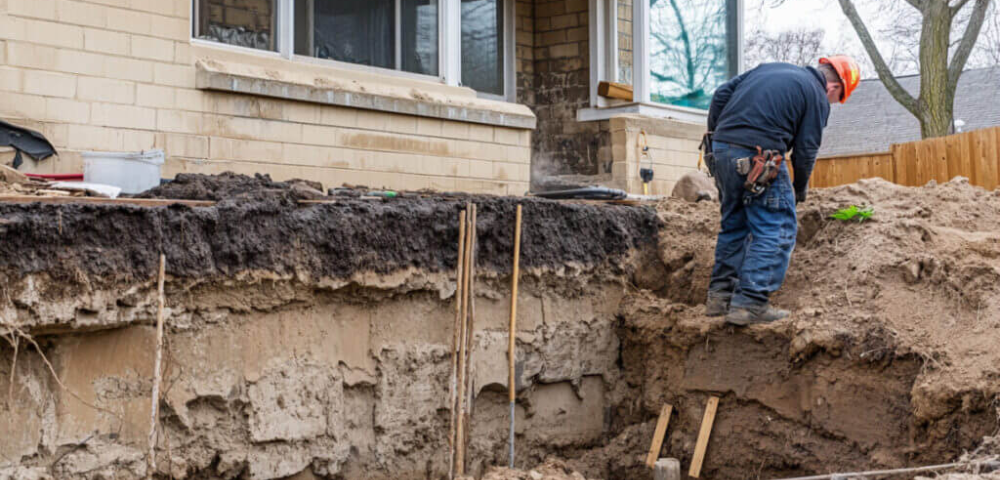
Initiating an underpinning project begins with a thorough assessment by a qualified structural engineer or foundation specialist. They will diagnose the cause of the foundation problem, evaluate the extent of the damage, and determine the most appropriate underpinning solution. This diagnostic phase is critical for ensuring the repair is effective and long-lasting. Once a plan is established, the physical work begins. This often involves carefully excavating around the foundation to access the areas needing reinforcement. New supports are installed, concrete is poured, and structural elements are integrated according to the engineering design. The process requires precision to avoid further destabilizing the structure during the repair. Throughout the project, structural integrity is paramount. Following the installation of new supports or reinforcements, the area is backfilled, and the site is restored. The goal is to leave the foundation stable and the property secure for years to come.
Addressing Soil Movement and Water Intrusion
Soil movement is a primary driver for foundation issues, particularly in regions prone to drought and heavy rainfall. Expansive soils swell when wet and shrink when dry, causing differential settlement that can crack foundations. Conversely, erosion can wash away supporting soil, leading to voids beneath the foundation. Underpinning techniques like deep piers or piles can reach stable soil strata, unaffected by surface moisture fluctuations. Furthermore, implementing effective drainage solutions is a vital component of long-term foundation health. This can include French drains, grading improvements, or sump pumps to divert water away from the foundation. By addressing both the structural weaknesses and the underlying soil or water issues, underpinning provides a comprehensive solution to maintain a stable and secure building envelope. An earthquake retrofit, which often includes underpinning and house bolting, is designed to withstand seismic forces by ensuring the structure is firmly anchored and reinforced.
Common questions
What exactly is underpinning?
Underpinning is a process of strengthening or deepening an existing foundation to improve its load-bearing capacity or to stabilize it when soil conditions have changed.
When is underpinning typically needed?
Underpinning is generally needed when a foundation is showing signs of distress, such as settlement, cracking, or inadequate support due to soil issues, or when a building’s load has increased.
What are some common underpinning methods?
Common methods include pier and post support systems, “sistering” foundations by adding new structural elements alongside the old, and integrating house bolting for seismic retrofitting.
How does underpinning relate to seismic retrofit?
Underpinning can be a component of a seismic retrofit or earthquake retrofit by strengthening the foundation and ensuring the structure is securely anchored, thus improving its resistance to earthquake forces.
Are drainage solutions part of underpinning?
Yes, drainage solutions are often implemented alongside underpinning to address water-related soil issues that may be contributing to foundation instability.